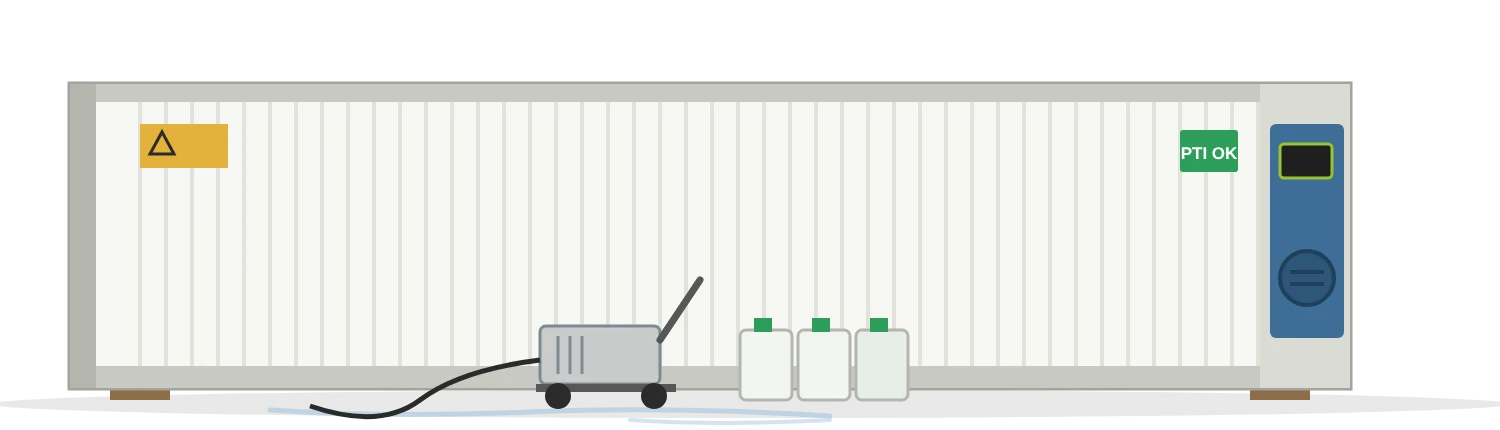
Container fumigation? Start with a clean box.
We don’t fumigate. We wash, inspect and PTI reefers at our PPECB-certified facility in Germiston, so the box is ready before food goes in.
- PPECBCertified reefer wash and PTI
- 100%Food-grade audit, passed
- IICLCertified team on every reefer
One reefer, made ready.
- 01
Washed
Residue, odours and pests from the last load washed out, from the machinery end to the doors.
- 02
Inspected
Door seals, walls and roof, the T-bar floor, the air deflector and the drain plugs.
- 03
Pre-trip inspection
The controller, alarms and sensors, and a cooling cycle to the set point.
- 04
Treatment, if asked
Fumigation by a registered fumigator, or cold treatment in transit. Not ours, but we plan around it.
Request a quote for your reefers
Your reefers
Step 1 of 6- Service
- —
- Reefers
- —
- Cargo
- —
- Then
- —
- When
- —
- Clean box check
- Optional
The facility, and the Board’s checklist
What our reefer facility is, and what the PPECB checks before an export reefer is stuffed, from the Export of Perishable Products Regulations, 2025.
Our facility
- PPECB-certifiedReefer workshop, washing, PTI
- 100% food-grade auditPassed
- IICL-certified teamPrepares, cleans, inspects
- One siteGermiston, 20 plug points
What the Board checks
- Clean, dry, no odourInside the box, reg 36(3)
- Doors seal airtightRubber seals sound, reg 36(2)
- Floor and deflector clearFor the airflow, reg 36(3)
- 60 daysEach approval, reg 36(7)
Fumigation: not ours
A registered pest control operator fumigates (Act 36 of 1947). The box carries a warning mark on its doors with the fumigant, date and time, then the ventilation date; the mark comes off once it’s ventilated and unloaded (IMDG Code 5.5.2).
Cold treatment
Low temperature over a set time to kill quarantine pests. In transit, the reefer’s probes are calibrated with the Board present, with a temperature log (Export of Perishable Products Regulations, 2025, regs 1, 37(1)).
Pre-cool the cargo
Except ambient shipments, only pre-cooled product approved by the Board is loaded (reg 62(5)). Lines warn against pre-cooling the empty box: it brings condensation, except through a cold tunnel.
Where we operate
Our head office and 24-hour control centre are at 69–71 Barlow Road, Jupiter, Germiston, beside our container depot, where our reefer workshop, wash bay and PTI station stand, with an office in Durban.
- Germiston depot69–71 Barlow Road, Jupiter, Germiston 011 873 4786
- Durban · Greyville81 Berea Road, Greyville, Durban 031 305 0438

Part of Shipping & General Transport
Shipping & General Transport is a privately owned South African logistics company built on trustworthiness, perseverance and reliability. Container Fumigation is one of its specialist services: reefers washed, inspected and put through a pre-trip inspection at our PPECB-certified facility, ready before food goes in.
Visit shippingandgeneral.co.zaQuestions about a clean box
Can’t find your answer? Our team is a phone call away.
Call 011 873 4786Do you fumigate containers?
No. Fumigating with restricted remedies is for a registered pest control operator, or someone under their direct supervision (Act 36 of 1947 and the Pest Control Operator Regulations). We wash, inspect and run pre-trip inspections on reefers at our PPECB-certified facility in Germiston, so the box is ready before food goes in.
What does your facility do?
It’s a newly built reefer workshop, washing and pre-trip inspection (PTI) facility at our Germiston container depot. It’s PPECB-certified and passed a 100% food-grade audit, and an IICL-certified team prepares, cleans and inspects the reefers, all on one site.
What is a PTI?
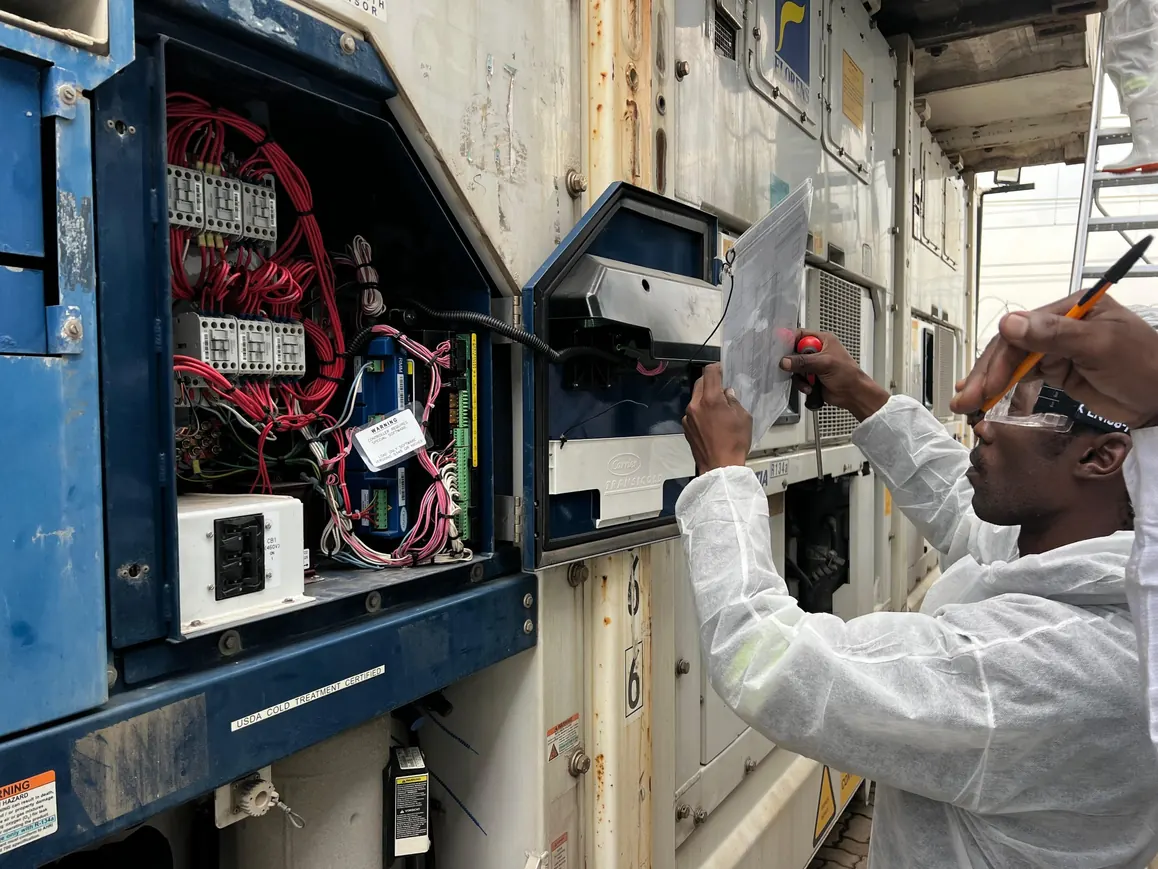
A pre-trip inspection of an empty reefer before it’s loaded: the box itself (walls, floor, roof, doors and seals), the refrigeration unit, the wiring, the controller and its alarms, the sensors against the temperature inside, and a cooling cycle. For an export, it’s done at the chilled or frozen temperature (reg 37(2)).
What does the PPECB check before stuffing?
The box cleaned to its satisfaction and inspected by its representative before stuffing. Inside: clean, dry, no flaking or transferable rust, free of all odours, the T-bar floor and air deflector clear, Board-approved drain plugs. Outside: doors that seal airtight with sound rubber seals (reg 36). The air exchange vents work and are closed for the inspection (reg 37(3)).
How long does the Board’s approval last?
Each approval of a container is valid for 60 days from the date the Board approves it (reg 36(7)).
Who must supply a clean box?
For perishable exports, shipping lines must make sure the reefers they supply are clean, dry, taint free and technically and structurally sound, and a Board representative checks before any product is loaded (reg 36(5), (6)). For any container, the CTU Code says whoever provides the box provides it clean, free of cargo residues, noxious materials, plants and visible pests (4.2.1).
Should I pre-cool the reefer?
Pre-cool the cargo, not the empty box. Except ambient shipments, the Board loads only pre-cooled product it has approved (reg 62(5)). Shipping lines warn that pre-cooling the empty container brings condensation that can damage cartons, except where it’s loaded through a sealed cold tunnel.
What does a fumigation mark mean?
A fumigated container carries a warning mark on its doors with the fumigant used and the date and time. Once it’s completely ventilated, the ventilation date goes on the mark; the mark comes off once it’s ventilated and unloaded. A box travelling unventilated is declared as UN 3359, fumigated cargo transport unit, class 9 (IMDG Code 5.5.2).
Is a ventilated box safe to go into?
Treat it with care. The CTU Code advises opening the doors so the air settles, and even after ventilation treating the container as an enclosed space, ready to test the air before anyone goes in. If in doubt whether a box was fumigated, treat it as fumigated.
What is cold treatment?
Keeping a product at a low temperature for a set time to kill quarantine pests, in a cold store or in the reefer in transit (reg 1). For in-transit cold treatment, the reefer’s probes are calibrated with the Board and/or the Department present, to the importing country’s specifications (reg 37(1)). Our site doesn’t state probe calibration, so ask us.
Do you wash dry containers?
Our wash bay and PTI station are for reefers. Our depot handles dry containers too, so ask us about a dry box.
What else do you do with reefers?
We stage them on 20 plug points at our depot, move them with 10 underslung gensets, and plan which perishables can share a box on perishabletransport.co.za. We don’t publish prices: answer the short questions and we quote on your boxes.
What goes in the box?
Five short questions and your contact details, plus your clean box check if you like. No prices online, just a quote on your actual reefers.